The Contractor Content Engine: Earning Trust Before You Ever Step Foot on the Job
A complete content playbook for independent contractors. Learn how to document your job sites, explain your bidding process, and answer local homeowners' biggest remodeling questions to win more bids.
1Moving Beyond the 'About Us' Page
For decades, the standard website for an independent general contractor consisted of three pages: a generic homepage, a vague "About Us" page detailing how many years they've been in business, and a contact form. In the modern digital landscape, this bare-minimum approach is completely ineffective.
Homeowners planning a major remodel or a substantial roof replacement are terrified of hiring the wrong crew. They spend weeks researching options, looking for a contractor who demonstrates deep expertise and absolute transparency before they are willing to request a bid.
Content marketing for contractors is not about writing flowery blog posts; it is about systematically answering the questions your prospective clients are secretly agonizing over.
When a homeowner is considering an open-concept kitchen remodel, they aren't searching for "how long has Mike's Contracting been operating." They are searching for "how much does it cost to remove a load-bearing wall" or "how long does a full kitchen remodel take." If your website provides clear, authoritative answers to those exact questions, you establish yourself as the trusted expert in their mind before you ever shake their hand.
By transitioning your website from a generic digital brochure into an extensive library of remodeling intelligence, you completely change the sales dynamic. Once an educated homeowner reads your thorough guide on navigating local permitting, they are already sold on your professionalism. Your goal is to map out every single fear, objection, and question a homeowner might have, and create a piece of content that addresses it head-on. This approach acts as a powerful supplement to the sophisticated local search methods outlined in our Google Maps technical setup guide.
2Documenting the Process Instead of Just the Product
Most contractors limit their visual marketing to highly polished, stylized photographs of the finished project. While beautiful "after" shots are vital for the portfolio, they represent only a fraction of the story. Anyone can hire a professional photographer to snap photos of gleaming quartz countertops and swept hardwood floors.
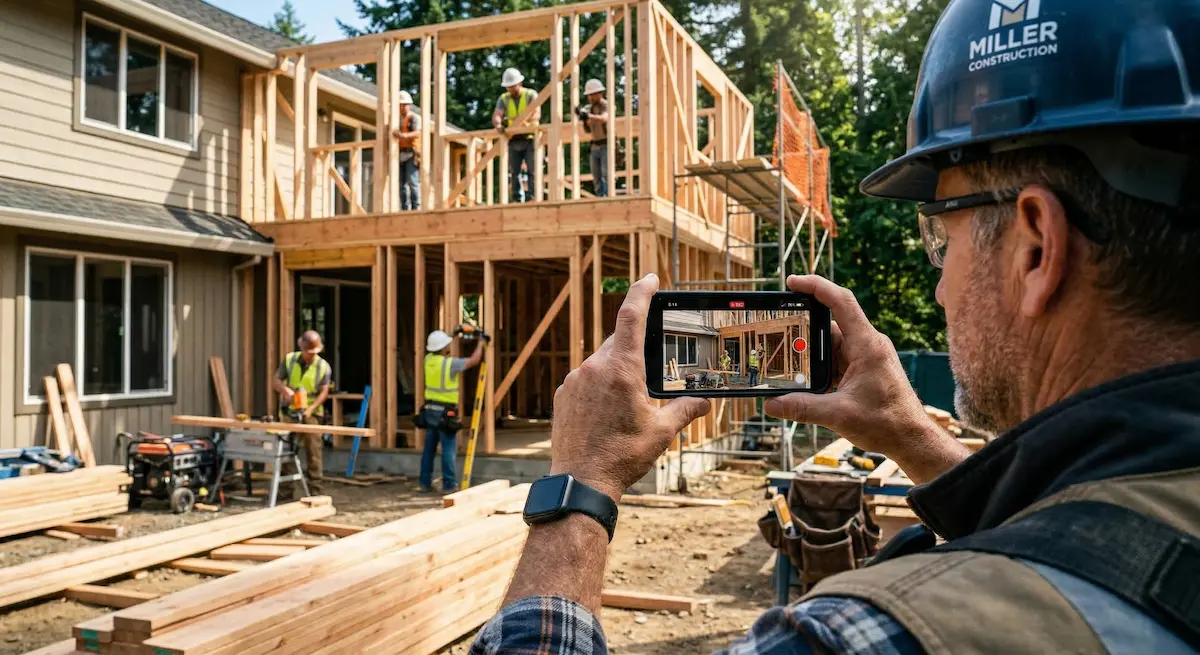
What truly separates a premium contractor from an amateur is the willingness to document the messy, complicated reality of the construction process.
Homeowners are fascinated by the "how." They watch endless hours of home renovation shows because the transformation process is captivating. You can harness this by implementing a strategy of process documentation:
- Record a two-minute raw video explaining how your crew properly waterproofs a custom shower pan before the tile goes up.
- Take photographs showing the clean, organized layout of your electrical rough-ins before the drywall hides them forever.
When you publish this "behind the walls" content, you are proving your commitment to craftsmanship. A cheap contractor cuts corners where the customer will never see it; a premium contractor proudly photographs the structural framing and membrane systems because they know it is executed flawlessly. Process documentation builds an insurmountable level of trust. When a prospect sees that you care deeply about the invisible elements of the build, they have complete confidence that the visible finish work will be spectacular.
3Creating Hyper-Local Neighborhood Case Studies
National home improvement websites like Houzz or Angi produce thousands of generic articles about remodeling trends. You can never compete with their massive budgets on broad topics like "Top 10 Bathroom Tile Ideas." However, those massive corporations know absolutely nothing about the specific historical zoning restrictions in your town's oldest neighborhood, or the specific soil composition issues that affect foundation pours in the new suburban developments.
Your massive advantage is localized expertise.
Instead of writing standard blog posts, you should create robust Neighborhood Case Studies. When you complete a major renovation, write a detailed breakdown dedicated specifically to that project's location.
Example Title: "Transforming a 1950s Colonial in the Elmwood District: Challenges and Triumphs."
In that article, detail the specific problems unique to that area—perhaps navigating the outdated knob-and-tube wiring common to Elmwood homes, or working with the strict local architectural review board to get exterior modifications approved.
These hyper-local case studies are search engine magnets. When another homeowner in the Elmwood district starts searching for a remodeler, Google recognizes the immense local relevance of your case study and serves it up immediately. The prospective client reads the article and realizes you have already successfully conquered the exact same neighborhood-specific headaches they are facing. You are no longer just a contractor; you are the undisputed remodeling specialist for their exact zip code.
4Demystifying the Bidding and Pricing Process
The largest source of anxiety for any homeowner embarking on a construction project is the budget. The industry has a terrible reputation for bait-and-switch pricing and hidden fees. Because the vast majority of contractors hide their pricing structures behind vague consultations, you have a massive opportunity to stand out through total financial transparency.
Create dedicated content that breaks down exactly how your bidding process works and what factors drive costs up or down. Write an expansive, honest guide titled, "The Reality of Kitchen Remodel Costs in 2026," and break down:
- The price differences between custom and semi-custom cabinetry.
- The labor impact of moving structural walls versus keeping the existing footprint.
- The hidden costs of plumbing and electrical system upgrades.
You do not need to publish precise binding quotes online, but providing realistic price ranges and explaining the methodology behind your estimates is revolutionary to a nervous homeowner. When you clearly explain why your thorough, fully-permitted bid might come in higher than the suspiciously cheap estimate from a "guy in a truck," you educate the client on the immense value of professional project management, proper insurance, and high-quality materials.
This transparent content acts as an automated filter, educating serious, high-budget clients on your value while simultaneously repelling tire-kickers who are only searching for the cheapest possible shortcut.
5Answering the 'Nightmare' Scenarios
Every prospective client has heard horror stories about contractors who disappear for weeks, leave the property a hazardous mess, or demand sudden cash infusions to finish a delayed job. If you completely ignore these fears in your marketing, the homeowner will simply silently worry about them.
The most advanced content strategy involves acknowledging the industry's bad reputation and explaining exactly how your company's standard operating procedures prevent those nightmare scenarios from occurring.
Publish a detailed guide outlining what a homeownwer should expect during the hardest parts of the build. Create articles titled:
- "How We Protect Your Living Space During Major Demolition"
- "Our Communication Guarantee: Why You Will Never Wonder Where Our Crews Are."
In these pieces, explain your use of HEPA air scrubbers, protective floor coverings, and zippered dust walls. Detail your policy on returning phone calls within two business hours and your use of shared digital project calendars.
By dragging the homeowner's worst fears into the light and presenting concrete, operational solutions, you disarm their anxiety completely. They realize that you are sophisticated enough to anticipate the stress of a major remodel and that you have built systems specifically to manage it. This level of psychological empathy in your content is incredibly rare in the construction trades and practically guarantees you the bid over a competitor who just hands them a spreadsheet of costs.
6The Content Multiplier: One Project, Five Assets
The most common objection contractors have to content marketing is the perceived lack of time. They believe they cannot possibly manage complex job sites and simultaneously run a digital marketing campaign. The secret is the content multiplier effect: capturing the raw material once and distributing it across multiple platforms to maximize the return on minimal effort.
When your foreman captures a two-minute raw video of a beautifully executed drywall hanging on a Tuesday, that single piece of media is the seed. That evening, you can utilize that one video in five distinct ways:
- YouTube: Upload the raw video directly to your channel with a descriptive title.
- Website Blog: Embed that video into your latest Neighborhood Case Study on your website.
- Google Maps: Take a screenshot of the best frame and post a "Google Post" update.
- Social Media: Share the video on your company Facebook or Instagram page to engage followers.
- Newsletter: Include the link in a monthly email blast to past clients and warm leads.
This workflow takes fifteen minutes at the end of the day, yet it generates a massive digital footprint. You do not need to hire an expensive agency to produce Hollywood-quality commercials; authentic, educational field footage is far more convincing to a homeowner. By building this simple distribution habit, your real-world labor continuously generates the digital assets needed to keep your pipeline completely overflowing with high-value contracts.