The 2026 Contractor Profit Playbook: High-Margin Services You Should Be Offering
A forward-looking guide to the most profitable opportunities for small and medium-sized contractors in 2026. Covers ADU construction, energy-efficient retrofits, and building recurring revenue through property maintenance.
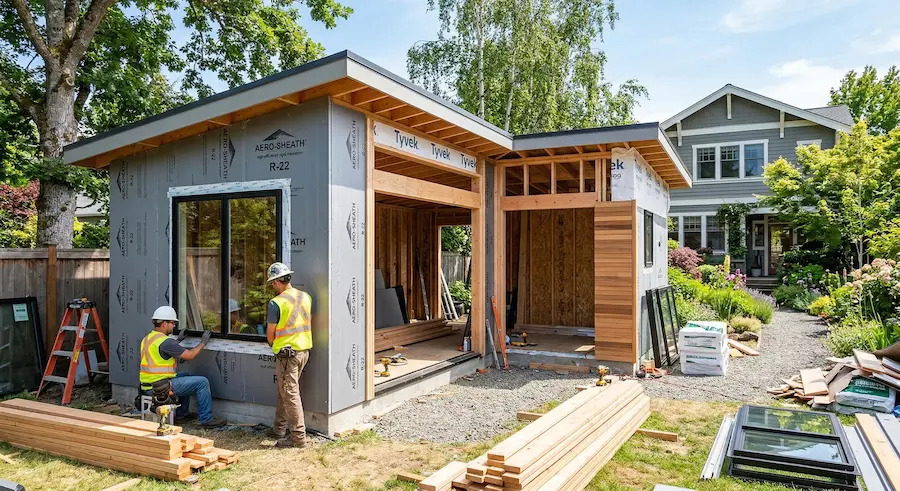
1The Explosion of Accessory Dwelling Units (ADUs)
The residential construction landscape is rapidly shifting beneath the feet of traditional contractors. As housing shortages intensify and zoning laws in major suburbs continue to relax, the demand for Accessory Dwelling Units (ADUs)—often known as granny flats, backyard cottages, or in-law suites—has absolutely skyrocketed. For an independent general contractor, this represents one of the most lucrative and rapidly expanding market segments of the decade.
ADUs are the perfect mid-scale structural project. They are substantially more profitable and complex than standard kitchen remodels, yet they do not require the massive capital overhead or multi-year timelines of ground-up custom home builds. Furthermore, because these structures are typically built on the property of an existing, occupied home, the homeowner prioritizes logistics, cleanliness, and speed over finding the absolute cheapest bid. They need to know the contractor can manage a tight job site without destroying their existing backyard or disrupting their daily lives for six months.
To capitalize on this wave, you need to position your company as the premier end-to-end ADU specialists in your region. This means not only handling the framing and finish work but also becoming an absolute expert in:
- Local ADU zoning laws
- Setback requirements and lot coverage limits
- Utility tie-ins (trenching power and sewer correctly)
Creating dedicated marketing materials and highlighting your ability to navigate the complex permitting process for these specific structures will instantly separate you from competitors who simply treat ADUs as standard sheds. Earning early reviews for smooth ADU builds creates a powerful flywheel of referrals, feeding directly into the content marketing strategies that pre-sell future high-ticket jobs.
2The Pivot to High-Performance Home Retrofits
Energy costs are continually rising, and homeowners are becoming increasingly aware of the financial and environmental impact of poorly insulated, drafty legacy homes. Consequently, the demand for high-performance home retrofits is transitioning from a niche environmental luxury into a mainstream necessity. This involves far more than simply blowing some generic fiberglass into an attic; it requires a deep understanding of building science, air sealing, and sophisticated HVAC integrations.
Contractors who educate themselves on modern building envelope strategies are unlocking a massive new revenue stream. Offering comprehensive "deep energy retrofits" allows you to bundle high-margin services together. A single contract might include:
- Complete exterior foam insulation wrapping
- The installation of high-efficiency triple-pane window packages
- Meticulous whole-house air sealing
- The integration of modern heat pump systems alongside specialized HVAC contractors
These projects often command premium prices because they deliver a verifiable return on investment through permanently lowered utility bills.
To capture this market, your crew needs to embrace modern materials and rigorous testing standards, such as utilizing blower door tests to prove the efficacy of your air sealing to the homeowner. By marketing yourself as a performance-driven contractor rather than just a cosmetic remodeler, you attract a highly educated, affluent demographic of homeowners willing to invest heavily in the long-term health and efficiency of their property. Documenting these advanced building techniques on the job site provides exceptional material to build local authority.
3Establishing Pre-Construction Consulting Fees
For decades, the standard operating procedure in the contracting industry was to offer free estimates. Contractors spend countless uncompensated hours driving to properties, analyzing structural challenges, and drafting detailed line-item proposals, only to be passed over for a crew that bid artificially low. As the complexity of modern builds increases, this model is becoming entirely unsustainable for high-quality firms.
The firms winning the profit game in 2026 are completely abandoning the "free estimate" model in favor of paid pre-construction consulting.
When a massive remodel or addition is proposed, you are essentially performing complex architectural feasibility and financial forecasting. You need to confidently charge for this expertise. Transition your sales process to include a formal "Project Discovery and Feasibility Phase." For a set fee, you provide the homeowner with:
- Conceptual budget brackets
- A deep dive into local zoning restrictions
- Preliminary structural engineering assessments
- A fully mapped realistic timeline for execution
If the client decides to proceed with the build, that consulting fee can be credited toward the final contract. If they back out, you have been compensated for your highly valuable expertise and time. This approach immediately filters out the tire-kickers and price-shoppers. The homeowners who gladly pay a consulting fee are serious clients who respect your professional knowledge and are mentally prepared for a high-quality, high-budget build. This transition shifts your posture from a desperate vendor seeking a bid to an authoritative advisor managing a complex project.
4Building Recurring Revenue with HOA Maintenance Contracts
The single greatest weakness of the traditional independent contracting model is its purely project-based nature. During the busy summer months, cash flow is incredible. During winter slowdowns or unexpected economic dips, the pipeline dries up, making it terrifying to maintain full-time payroll. To build an unshakable financial foundation for the future, smart contractors are aggressively securing recurring revenue streams through specialized maintenance contracts.
One of the most stable opportunities lies in securing maintenance agreements with high-end Homeowner Associations (HOAs) and boutique property management firms. These organizations manage millions of dollars of real estate and are desperate for reliable, high-quality, professional contractors to handle their perpetual upkeep. A single annual contract with an exclusive townhome community might include:
- Routine gutter cleanings and roof inspections
- Exterior envelope inspections and caulking
- Deck sealing and painting schedules
- Priority response for emergency exterior structural repairs
These contracts smooth out your cash flow, guaranteeing a baseline of income every single month regardless of the broader remodeling market. Furthermore, they establish deep relationships within dense residential clusters. When an HOA board member or a resident needs a major $80,000 kitchen remodel, you are already known, vetted, and trusted on the property.
Securing these contracts requires a highly polished professional image and a proven track record, making the accumulation of authentic community feedback vital. Expanding your reputation to capture these recurring corporate clients is the logical endgame of the tactics detailed in our emergency repair response guide.
5Integrating Smart Technology at the Framing Stage
The definition of a "modern home" is fundamentally changing. Smart home technology is no longer limited to plugging a voice assistant into a kitchen outlet; it is becoming deeply integrated directly into the framing and electrical bones of the house. From automated motorized window shades requiring hidden low-voltage wiring, to complex whole-home audio distributions and integrated security infrastructure, the physical structure of the home must accommodate profound technological demands.
As a general contractor, if you treat the "smart home" ecosystem as an afterthought, you are leaving an enormous amount of money on the table. You need to collaborate with specialized low-voltage technicians and smart home integrators during the initial design phase, long before the drywall goes up.
Offering a comprehensive "Future-Proof Structural Package" allows you to add a lucrative upsell to every major addition or remodel. You coordinate:
- The installation of conduit runs to every room
- Dedicated network closets with proper ventilation
- Structural backing for heavy automated installations (like 85-inch TVs or automated art covers)
By understanding the structural requirements of extreme home automation, you position your firm as sophisticated and forward-thinking. High-end clients building their dream homes demand these integrated conveniences. When you confidently manage the complexities of low-voltage integration alongside traditional framing and plumbing, you definitively prove that your company is equipped to build the luxury homes of the next decade, ensuring your bids command premium prices well into the future.